


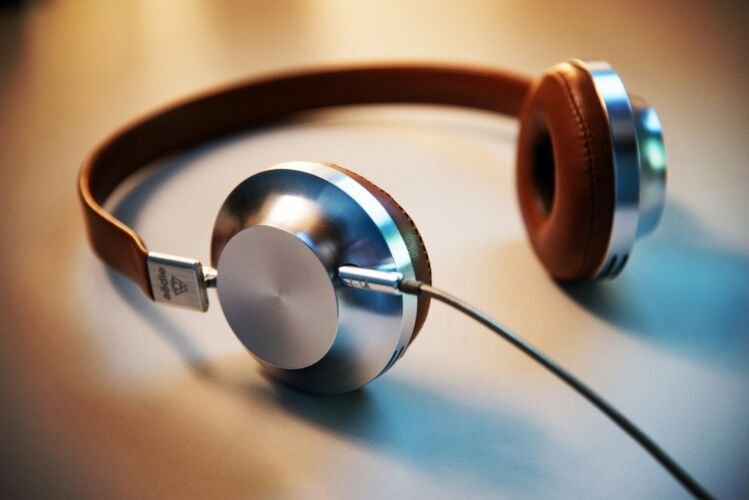
All-day headphones can cost you your hearing. The volume dial is the product, not the brand. Home-office calls, podcasts, and “focus playlists” add up to hours of sound an old office used to spread across a room. The National Institute for Occupational Safety and Health uses 85 decibels as the eight-hour occupational noise exposure limit in its Recommended Exposure Limit. Louder needs shorter time. A headset cranked to drown a lawn mower is not a productivity setup. It is a dose.
The National Institute on Deafness and Other Communication Disorders describes noise-induced hearing loss as damage that can be permanent. It can come from a one-time blast or from repeated exposure. You will not feel a tiny daily overdose. You will notice it later as tinnitus or as asking people to repeat themselves. That is a bad look on a client call and a worse look at age 55.
Headphone hearing damage is a dose, not a vibe
Consumer earbuds can play loud enough to matter. If someone sitting next to you can hear the music, it is too loud for all-day wear. If you remove the headset and the world sounds muffled, you overdid it. NIDCD’s public advice is consistent: lower the volume, take breaks, and do not treat ringing as normal.
NIOSH’s occupational frame is useful even if OSHA is not your employer. Eight hours at 85 dBA is the REL. Every 3-dB increase halves the recommended time under NIOSH’s exchange rate. You do not need a lab. You need to stop sitting at 80% volume for a full workday. Many phones can surface an approximate headphone audio level. Use the warning. Do not swipe it away like a software license.
Calls are often louder than music because you lean in to hear a bad mic. Fix the source: a wired connection, a quieter room, a boom mic so you are not cranking the other person’s voice. After-hours Slack already wrecks sleep. A loud headset wrecks the ears that have to do tomorrow’s calls.
A hearing policy for a company of one
- Volume at or below 60% as a default. If you cannot hear, change the room, not the dial.
- Five minutes off the ears every hour. Digital eye strain has 20-20-20. Hearing gets air.
- Over-ear cups at moderate volume beat in-ear buds at “I need to disappear” volume.
- One quiet hour a day with no audio at all. Silence is not lost productivity.
- If tinnitus lasts or speech is hard, see a clinician. NIDCD is information, not your audiologist.
Noise-canceling can help you keep volume down if it replaces cranking. It is not a license to sit inside a loud mix for eight hours. The cancelling just makes it easier to go too far without noticing the lawn mower.
Protect the tool you cannot replace
You can replace a laptop. You cannot replace the inner ear. Headphone hearing damage is optional in a home office. Turn it down. Take the headset off between calls. The playlist will wait. The client will still be audible tomorrow, which is the point.
If you edit audio or film for a living, treat this like shop safety. Calibrate once with a reputable meter or a conservative phone reading, then mark a physical stop on your volume habit. Professionals in noisy trades use hearing protection for a reason. Knowledge workers forgot they joined a noisy trade the day they put a speaker in each ear and called it focus. Take the breaks. Keep the volume boring. Boring is how you still hear the work in ten years.
Kids’ headphones on a shared table are not a separate essay, but they are a warning: if you model loud, they copy loud. Keep the house default low. Headphone hearing damage is easier to prevent than to reverse. NIDCD is not selling a headset. It is telling you the inner ear does not do refunds. Believe it while you can still hear the click of a quiet keyboard.