


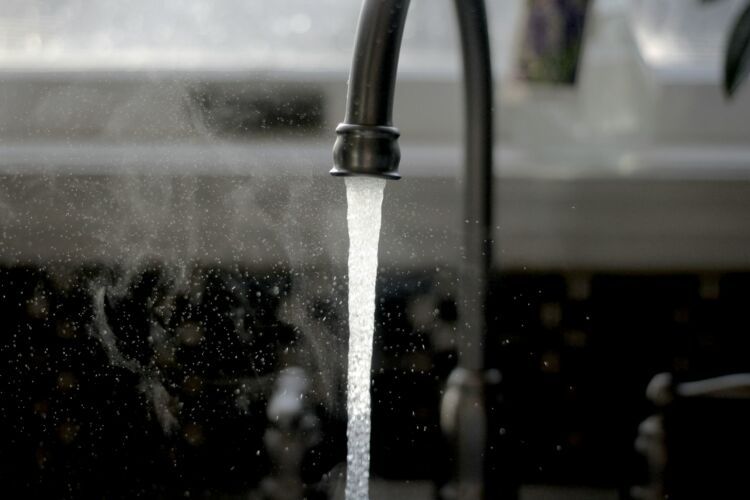
The coating that keeps an egg from sticking and the water that fills the glass can share a chemical family. PFAS “forever chemicals” persist in the environment, show up in drinking water, and have been used for decades in nonstick cookware, stain-resistant fabrics, and firefighting foam. They do not belong in a health halo. They belong in the category of exposures you can actually reduce.
PFAS are a class of thousands of compounds built around stubborn carbon-fluorine bonds. That is why they last. It is also why a coating that seemed like a kitchen miracle became a groundwater problem.
What are PFAS in tap water and cookware?
Per- and polyfluoroalkyl substances were valued because they repel water and grease. That property put them in pans, rain gear, carpets, food packaging, and the foams used at airports and military bases. From there they moved. They are mobile in water. They accumulate in people. The Environmental Protection Agency has linked long-term exposure to certain PFAS with harms that include effects on the liver, immune system, and increased cancer risk for some of the best-studied chemicals.
In April 2024 the EPA issued the first national, enforceable drinking-water standards for several PFAS. For PFOA and PFOS, the agency set a health-based goal of zero and an enforceable maximum contaminant level of 4.0 parts per trillion each. Other PFAS in the rule, including PFNA, PFHxS, and HFPO-DA (GenX), were given limits of 10 parts per trillion, with a hazard-index approach for mixtures. Those numbers are tiny because the concern is not a one-time sip. It is a lifetime of tap water.
Implementation has been politically messy, with later proposals to stretch deadlines and reopen parts of the rule. The chemistry did not get less persistent while the calendar moved. If your utility’s consumer confidence report lists PFAS, that is not a rumor. It is a lab result.
Does nonstick cookware still use forever chemicals?
Older Teflon-type coatings relied on related chemistry. Manufacturers have shifted formulations, and some pan lines are marketed as PFAS-free. Marketing is not a lab test. A “green” coating can still be a fluorinated polymer. Cast iron, stainless steel, and carbon steel do not need a plastic raincoat to cook an egg. They need a little fat and a little skill.
If the surface is flaking, stop using it. Replace it with a pan whose material you can name without a trademark. Water is the exposure you cannot sauté away. Activated-carbon filters and reverse-osmosis systems can reduce many PFAS, but not every pitcher filter is designed for them. Look for certification that names PFAS or PFOA/PFOS reduction, and change cartridges on schedule.
How can you lower PFAS exposure at home?
- Read your water utility’s annual report and any PFAS-specific notices.
- If levels are elevated, use a filter certified for those compounds, or a reverse-osmosis system maintained as directed.
- Cook in cast iron, stainless, or carbon steel instead of peeling coated pans.
- Be skeptical of stain-proof furniture and grease-resistant takeout wrappers when you have a choice.
Water filters are not interchangeable. A pitcher that tastes better is not automatically a PFAS filter. Look for NSF/ANSI statements that name PFOA, PFOS, or PFAS reduction, or a reverse-osmosis unit with a published reduction claim, and change cartridges on the schedule the maker actually printed. Boiling does not destroy these chemicals. It can concentrate them as water leaves as steam. If you rely on a well, testing is the only map. A city report does not describe a private well.
Packaging still matters on weeks you never touch a skillet. Grease-resistant wrappers, some microwave popcorn bags, and stain-proof treatments have been PFAS vehicles. You will not live a zero-fluorine life in a modern city. You can stop paying extra for a coating that exists to make cleanup faster than learning to cook in steel.
Forever is a marketing word when it describes a skillet. It is a chemistry word when it describes a bond that outlasts the person who bought the pan. Reduce what you can. Filter what you drink. Stop treating nonstick convenience as a health technology. It never was.