


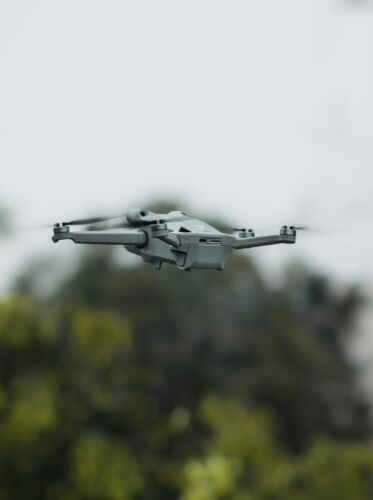
If you have ever watched your fries cool while a driver crawls through traffic, relief may be on the way. Uber Eats is restarting its pursuit of aerial meal delivery through a new collaboration with Flytrex, aiming to launch U.S. pilot markets before the end of the year. The plan is simple to describe and ambitious to execute: integrate Flytrex’s drones into the Uber Eats app, deliver meals in minutes from pickup to drop-off, and cut some delivery cars from the road. Uber is also making a financial investment in Flytrex to help speed up deployment and scale operations. Together, the companies are pitching faster service, more precise ETAs, and a smaller environmental footprint for last-mile logistics.
Why Flytrex matters
Flytrex is one of a small group of operators authorized by the Federal Aviation Administration for Beyond Visual Line of Sight missions. BVLOS means a pilot can oversee flights that travel outside direct line of sight, a critical capability for practical drone delivery at scale. The company already runs small-package flights in select U.S. locations and supports Walmart’s drone delivery program, giving it real-world experience in retail and food delivery. That operational track record offers Uber a partner with infrastructure, regulatory clearances, and day-to-day know-how. For Uber Eats, it is a shortcut to deployment instead of building a drone program from scratch.
What the partnership includes
Uber plans to integrate Flytrex’s service inside its Eats platform in select test markets, so customers will order as usual, then receive an aerial handoff instead of a car drop-off. The targeted outcome is faster order fulfillment, measured in minutes from pickup to delivery, and a reduction in street congestion by shifting some runs from ground to air. Uber’s capital investment in Flytrex is designed to expand U.S. operations and accelerate technology rollout. If pilots go well, expect a broader footprint than earlier trials and more city pairs coming online. The companies are also positioning the effort as a step toward more sustainable delivery, which resonates as cities push for lower emissions and fewer traffic snarls.
Lessons from Uber’s first drone attempt
Back in 2018, Uber said it wanted to launch drone-based meal delivery by 2021. The company tested the waters under its Uber Elevate program, including limited McDonald’s deliveries in 2020. It even unveiled a vertical-takeoff drone concept sized for meals for two, though that concept’s current status is not specified. Those early efforts did not progress to broad commercial availability. The new approach leans on a specialized partner with approvals already in place.
What is different now
Uber has shifted from building an in-house aircraft and end-to-end program to partnering with an FAA-authorized, field-tested operator. That choice lowers technical risk and speeds time to market by using proven aircraft, procedures, and support systems. The addition of capital aims to move beyond isolated tests and into real-world deployment with paying customers and repeatable routes. The strategy signals that Uber expects a wider pilot footprint than before, with more neighborhoods eligible for aerial delivery. It also aligns with a broader industry pivot toward autonomy as a core capability rather than a side experiment.
The tech and rules that make it possible
BVLOS authorization is the difference between a novelty and a scalable service. Without it, flights must stay within a pilot’s direct view, which limits range and density. Only a limited number of U.S. providers have won this authorization, so Flytrex’s status is a key enabler for Uber’s plans. Beyond regulation, advances in flight control, sense-and-avoid systems, and automated fleet management allow drones to operate predictable routes with reliable timing. The environmental case also matters, since transportation accounts for roughly 29 percent of U.S. greenhouse gas emissions, according to federal estimates, and last-mile delivery is a growing contributor in many cities.
How it could affect customers, merchants, and cities
For customers, drone service could mean faster arrivals, expanded delivery zones, and more accurate ETAs that reflect a direct aerial path instead of traffic bottlenecks. Merchants might gain a new fulfillment channel that helps during peak periods, letting kitchens move more orders without waiting for available drivers. Cities could see incremental relief on busy corridors if even a fraction of deliveries move off the road. Fewer short car trips may translate to less congestion and lower localized emissions in neighborhoods with heavy delivery demand. Over time, aerial logistics could complement bike, scooter, and autonomous ground delivery as part of a mixed fleet approach.
Questions still to be answered
Several unknowns remain before the first meals take flight. Uber and Flytrex have not named specific pilot locations or restaurant partners, which will shape route distance, demand density, and community reception. Operational details are also in focus, such as how flights will be routed, how packaging will handle heat and spill protection, and what drop-off methods will look like, whether yard, curbside, or designated landing points. Weather, noise, payload limits, and airspace constraints may vary by region and could be more challenging in dense urban areas than in suburbs. Timelines and criteria for expanding beyond pilot markets will likely depend on customer satisfaction, safety metrics, and city approvals.
The bigger vision
Uber is presenting the move as the next step in automating mobility and delivery at scale. The near-term goal centers on speed and reliability, yet the longer arc points to cleaner, smarter last-mile logistics that match the growth of on-demand commerce. If aerial delivery delivers on convenience, safety, and cost, it could become part of the standard delivery mix in select geographies. The collaboration with Flytrex suggests a pragmatic path forward, where a platform company teams up with a specialized operator to bring a futuristic idea into daily life. Your next hot meal might not need a parking spot at all, only a safe spot to land.