


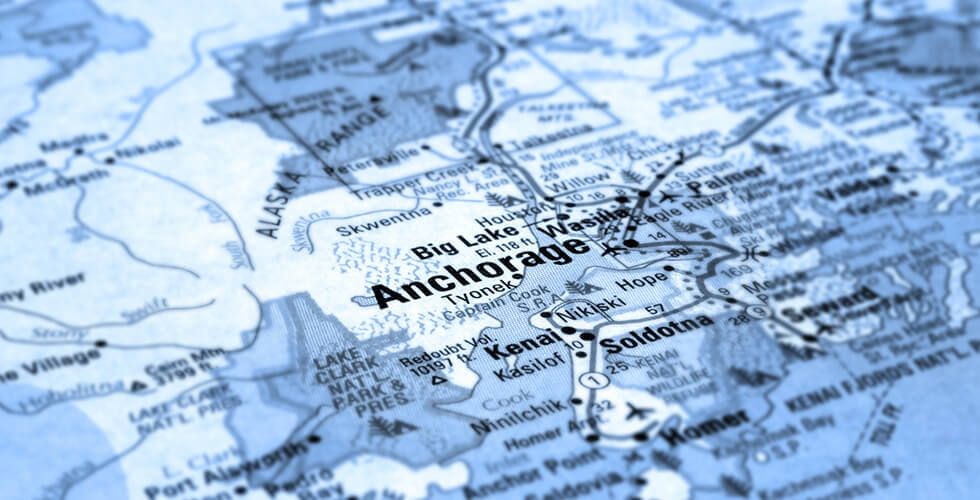
As U.S. President Donald Trump and Russian President Vladimir Putin prepare for high-stakes talks in Anchorage on Friday, the location is sparking more than diplomatic curiosity. Alaska—once a Russian colony—has again become the subject of online speculation and nationalist rhetoric from Moscow.
The summit venue, a remote army base in Alaska’s capital, was chosen partly for practicality. The state’s proximity to Russia—just 90 kilometers across the Bering Strait—means Putin can avoid flying over Western airspace, where the International Criminal Court’s arrest warrant could complicate travel. Yet the symbolism is impossible to miss: Alaska was sold by Tsar Alexander II to the U.S. in 1867 for $7.2 million, a transaction meant to ease Russia’s post-Crimean War debts. Officially the 49th U.S. state since 1949, it is now the largest in the union.
Putin’s visit—the first by a Russian president to Anchorage—has reignited imperialist narratives in Russian media and political circles. State TV personalities have called Alaska “our Alaska,” while Dmitry Medvedev has joked about war with the U.S. over the territory. A resurfaced 2022 billboard reading “Alaska is ours” and recent comments from Kremlin negotiator Kirill Dmitriev describing the state as “Russian American” have fueled chatter.
Social media claims that Russia’s Supreme Court nullified the 1867 sale, or that a 2024 Kremlin decree made it illegal, have no factual basis. The January 2024 decree does exist, but it only allocates funds to identify and protect “historic overseas assets” without mentioning Alaska. Analysts say, however, such language could be leveraged to reopen historical disputes elsewhere.
For now, there’s no legal evidence Moscow is preparing to reclaim Alaska. Still, the symbolism of meeting on former Russian soil—against the backdrop of war in Ukraine—ensures that both diplomacy and history will loom large over Friday’s talks.