


Open your pantry. If the clear plastic bottle says soybean, canola, corn, sunflower, or the catch-all “vegetable oil,” you have been cooking with the fats that public-health messaging still calls heart-healthy. That label is one of the more durable nutrition mistakes of the last fifty years. Conventional seed oils are a quiet driver of chronic inflammation, and the swap to extra-virgin olive oil, avocado oil, butter or ghee, and animal fat is the actual health move.
You were not supposed to notice. These oils are cheap, odorless, and in almost everything. Salad dressing. Mayonnaise. Restaurant fryers. The “light” crackers and granola bars marketed as better-for-you. Once you start reading labels, you will see them in places you never thought to look.
The heart-healthy story that never added up
The pitch was simple. Animal fat raises cholesterol. Seed oils lower cholesterol. Therefore seed oils protect your heart. Lower a number, save a life.
That chain of logic was always the weak part. In recovered data from the Sydney Diet Heart Study, men with recent heart disease were told to replace saturated fat with linoleic-acid-rich safflower oil and margarine. Their cholesterol fell. Their death rates did not. The intervention group had higher all-cause mortality (17.6% versus 11.8%) and higher coronary heart disease mortality (16.3% versus 10.1%) than controls, according to the 2013 reanalysis in The BMJ by Christopher Ramsden and colleagues. Cholesterol went down. Outcomes went the wrong way.
The Minnesota Coronary Experiment, another mid-century trial that swapped saturated fat for linoleic-acid-rich corn oil, was built to prove the same idea. Recovered data, again published in The BMJ in 2016, found the oil lowered serum cholesterol and still showed no benefit for coronary heart disease or death. If the only thing you watch is LDL, seed oils look like a win. If you watch whether people live, the win evaporates.
Meanwhile, the fat that traditional diets actually used — extra-virgin olive oil — keeps showing up on the other side of the ledger. In the PREDIMED trial, 7,447 adults at high cardiovascular risk were assigned to a Mediterranean pattern with extra-virgin olive oil, the same pattern with nuts, or advice to eat low-fat. After a median 4.8 years, the olive-oil arm had a lower rate of major cardiovascular events than the low-fat control (hazard ratio 0.69). That is a real-food fat, not a factory oil, sitting in a large primary-prevention study.
How seed oils actually get made
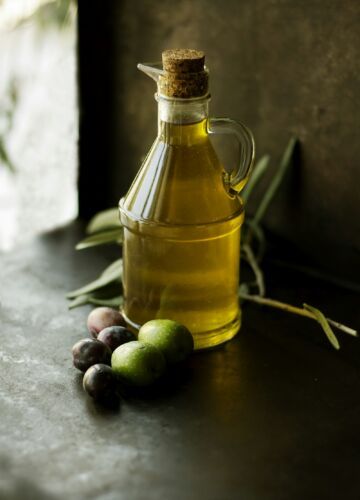
Extra-virgin olive oil is pressed from fruit. The International Olive Council’s standard is blunt about it: virgin oils come from olives solely by mechanical or physical means, with no treatment beyond washing, decanting, centrifuging, and filtering. Extra virgin also has to stay at or below 0.8% free acidity. You can taste the fruit. That is the point.
Soybean, canola, corn, and sunflower oil do not start that way. The American Oil Chemists’ Society describes hexane solvent extraction as the dominant industrial method for soybeans, canola, and sunflower. The seed is cracked, cooked, and flaked. Hexane washes through the flakes and dissolves the oil. Then the crude oil is refined, bleached, and deodorized — the industry’s RBD process — so it is pale, shelf-stable, and almost flavorless.
Deodorization is not a gentle finish. Refining literature puts the steam-stripping step in a high-temperature range, often cited around 230–270°C, under vacuum. That heat is also where process contaminants form. Codex Alimentarius adopted a code of practice in 2019 specifically to reduce 3-MCPD esters and glycidyl esters in refined oils, because those compounds show up during high-heat deodorization. The International Agency for Research on Cancer classifies 3-MCPD as possibly carcinogenic to humans (Group 2B) and glycidol as probably carcinogenic (Group 2A). These are not reasons to panic over a restaurant meal. They are reasons to stop treating a heavily processed commodity oil as a health food.
What you buy in that clear bottle is not “just plants.” It is an industrial extract that had to be stripped of its original color, odor, and most of its native compounds so you would put it on a salad.
Why linoleic acid sits in your tissues
The fatty acid that defines these oils is linoleic acid, the main omega-6 polyunsaturated fat in the modern diet. USDA composition tables compiled in the same BMJ analysis put linoleic acid at about 50 grams per 100 grams of soybean oil, 54 grams in corn oil, and 66 grams in conventional sunflower oil. Olive oil sits near 10 grams. Butter oil is about 2 grams. That is not a rounding error. It is a different food.
You need some linoleic acid. You do not need a daily bath in it. Apparent U.S. soybean-oil consumption rose more than 1,000-fold between 1909 and 1999, according to Blasbalg, Hibbeln, Ramsden and colleagues in the American Journal of Clinical Nutrition. Linoleic acid availability climbed from 2.79% of energy to 7.21% of energy over that century. USDA data later showed soybean oil still accounting for just over half of domestic edible-oil use as recently as 2016.
Your body stores what you eat. A 2015 review in Advances in Nutrition by Guyenet and Carlson found linoleic acid in U.S. adult adipose tissue rose 136% over the last half century, tracking the dietary shift toward polyunsaturated seed oils. Adipose linoleic acid turns over slowly — on the order of one to two years — so this is not a one-week kitchen experiment. It is a long occupancy.
Polyunsaturated fats are chemically more reactive than the monounsaturated fat in olive oil or the saturated fat in butter and tallow. Heat, light, and air push them toward oxidation. In a 2012 human study, Ramsden’s group showed that lowering dietary linoleic acid reduced bioactive oxidized linoleic acid metabolites, or OXLAMs. Those oxidized products are one of the mechanistic reasons this conversation will not stay on a cholesterol spreadsheet. Inflammatory signaling is not a slogan. It is chemistry you can measure when the oil in the diet changes.
Mainstream reviews still argue that adding more linoleic acid does not raise blood inflammation markers in short feeding trials. That is a real finding, and it is also a narrow one. It does not undo the processing, the tissue storage, the frying chemistry, or the older trials where cholesterol fell and people did not do better. You can respect a blood test and still refuse to deep-fry your week in soybean oil.
The fats that belong in your kitchen
Extra-virgin olive oil is the everyday bottle. It is mostly monounsaturated, mechanically produced, and carrying polyphenols that refined seed oils had stripped out. In 2005, Beauchamp and colleagues reported in Nature that oleocanthal, a compound in extra-virgin olive oil, inhibits the same COX-1 and COX-2 enzymes as ibuprofen. They estimated that about 50 grams — roughly four tablespoons — of oil delivers on the order of 10% of an adult ibuprofen pain-relief dose. That is not a license to drink oil like medicine. It is a reminder that a peppery, throat-stinging extra-virgin oil is doing something a deodorized canola bottle is not. Use it on salads, vegetables, eggs, and most stovetop cooking. Buy bottles that actually say extra virgin. Store them dark and cool.
Avocado oil, when it is genuinely extra virgin or cold-pressed from the fruit, is another monounsaturated kitchen fat. It is the better high-heat option if you want a liquid oil for a hot pan. Read the label. “Pure” and “refined” avocado oil can be as processed as the seed oils you are trying to leave behind.
Butter and ghee are not the villains on the poster. They are traditional cooking fats with very little linoleic acid and far more heat stability than a polyunsaturated fry oil. Ghee is simply butter with the milk solids removed, which makes it even more useful on a hot pan. Use them for eggs, vegetables, and anything you would have reached for “a splash of canola” to cook.
Animal fat — tallow, lard, leftover bacon or roast drippings — is what people cooked in before the commodity crushers took over the American kitchen. It is stable in the oven and the skillet. It tastes like food. If you roast a chicken, keep the fat. That is not a biohack. It is thrift with a better fatty-acid profile than the bottle by the stove.
How to make the swap without turning your life upside down
You do not need a new identity. You need a different default fat.
- Put extra-virgin olive oil on the counter. Retire the soybean, canola, corn, and sunflower bottles.
- Cook eggs, vegetables, and steaks in butter, ghee, or a spoon of animal fat.
- Use avocado oil when you want a high-heat liquid fat.
- Read “vegetable oil,” “soybean oil,” and “canola oil” on dressings, mayonnaise, chips, and frozen foods, then pick another brand.
- At restaurants, assume the fryer is seed oil. Order food that was not sitting in it.
Whole nuts and seeds are not the same as industrial seed oil. Nobody is asking you to swear off walnuts. The problem is the refined, high-volume oil that now coats the food supply, not an almond in your hand.
Give it time. Because linoleic acid lingers in fat tissue, the kitchen change is a months-and-years project, not a three-day cleanse. That is actually good news. You are not hunting for a miracle dose of anything. You are stopping a daily exposure that never earned the word “healthy,” and putting real fats back where they belong.
The American diet did not get inflammatory because butter returned to the table. It got that way while seed oils were winning the heart-health argument on paper. Change the bottle. Keep the skillet. Cook like the label on the oil was never the expert in the room.
If the inflammation is already in your joints
Changing the oil in the pan is the long game. If your knees, hips, or hands are already stiff, that is a different job. Joint Flex is an eight-active formula, every milligram on the label, built to support cartilage and a healthy inflammatory response.
You get 60 days to decide, and you keep the bottles. Free shipping on every order.