


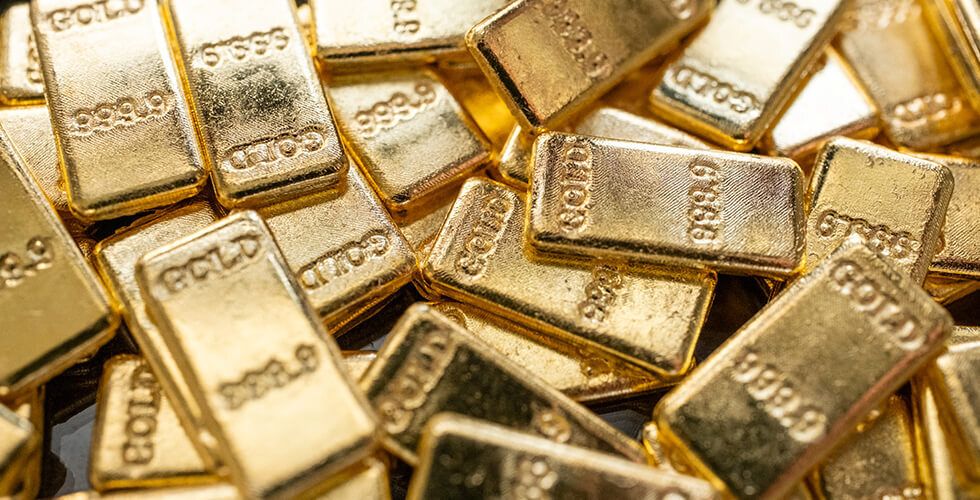
The global gold market was thrown into chaos Friday after conflicting signals emerged over potential U.S. tariffs on Swiss gold bars, sending futures prices to record highs before retreating sharply.
The turmoil began when the Financial Times reported Thursday that the U.S. had placed levies on the most commonly traded Swiss gold bars, effective April 5. A U.S. Customs and Border Protection ruling dated July 31 classified 1-kilogram and 100-troy-ounce cast gold bars from Switzerland under tariff-eligible categories.
The news sent New York gold futures soaring to an all-time high of $3,500 per troy ounce early Friday, trading at an unusually steep premium over London spot prices. Futures typically trade at a modest premium due to storage and delivery costs, but the sudden spike reflected fears of restricted supply.
By midday, prices eased to around $3,450 after Bloomberg reported that the Trump administration would soon issue an executive order clarifying that no tariffs would be imposed on Swiss gold bars. The futures premium over spot quickly normalized.
Gold mining stocks benefited from the confusion, with Freeport-McMoRan (FCX), Royal Gold (RGLD), and US Gold Corp. (USAU) all closing higher, outperforming broader markets.
The uncertainty comes after Trump raised Switzerland’s general tariff rate from 31% in April to 39% last week. Swiss President Karin Keller-Sutter left Washington earlier this week without securing a trade deal, according to Reuters.
One-kilo bars dominate trading on COMEX, the world’s largest gold futures market. If tariffs were to stick, Switzerland — where precious metals are the second-largest U.S. import category after pharmaceuticals — could face a major export setback.
For now, the bullion market is left jittery, as traders wait for official clarification on whether Swiss gold will remain tariff-free or become the next flashpoint in U.S. trade policy.