


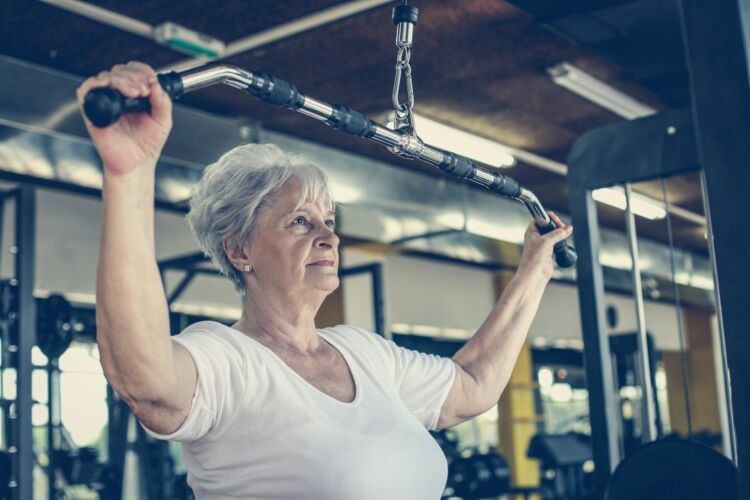
For years, the typical fitness advice for women over 50 was fairly predictable: walk more, try yoga, keep workouts gentle, and avoid anything too strenuous.
But a growing number of experts now say that approach may be missing something important.
Across fitness studios, doctor’s offices, and online wellness communities, one type of workout keeps coming up again and again for women in midlife and beyond — strength training.
Once associated mainly with younger gym-goers, strength training is now gaining traction among women over 50 who are discovering that building muscle can help support energy, balance, metabolism, and long-term health.
And the encouraging part is that it doesn’t require heavy weights or intense gym sessions to see the benefits.
What Changes in the Body After 50
Many of the physical changes women notice in their 50s and 60s are closely tied to a gradual loss of muscle.
Muscle mass naturally begins to decline around age 30, but the process tends to accelerate after menopause. As estrogen levels fall, both muscle and bone density can decrease more quickly.
That shift can show up in ways that feel familiar to many women:
- A slower metabolism
- More weight around the midsection
- Less stability or balance
- Increased joint discomfort
- Fatigue during everyday activities
Bone health is also affected. Some research suggests women can lose up to 20% of bone density in the years immediately following menopause, increasing the risk of fractures later in life.
This is where strength training becomes particularly valuable.
By challenging muscles through resistance, the body receives signals to maintain and rebuild muscle tissue, strengthen bones, and support better joint stability.
What Research Is Showing
Scientists are increasingly studying the role of resistance training in women’s health during and after menopause.
A 2025 study from the University of Exeter found that low-impact resistance training improved hip function and lower-body strength in women across pre-, peri-, and post-menopausal stages. Participants also gained lean muscle mass and showed measurable improvements in balance.
Other research has linked regular strength training with benefits that include:
- Better sleep quality
- Improved mood and mental clarity
- Reduced hot flashes
- Greater overall energy
These improvements can make a meaningful difference in daily life as women move through midlife and beyond.
Strength Training Doesn’t Have to Be Intense
One reason more women are embracing strength training later in life is that it’s far more accessible than many people assume.
You don’t need a gym full of heavy equipment to build strength. Many effective routines use simple tools such as:
- Resistance bands
- Light dumbbells
- Bodyweight exercises
Movements like chair squats, wall push-ups, resistance band rows, and overhead presses can strengthen major muscle groups without putting excessive strain on the joints.
The key idea behind strength training is something called progressive overload, which simply means gradually increasing the challenge over time. That could mean adding a few more repetitions, using slightly more resistance, or shortening rest periods.
For many women, two to three sessions per week lasting 20–30 minutes is enough to begin noticing improvements in energy, stability, and strength.
Why Many Women Discover It Later and Stick With It
Interestingly, women who begin strength training in their 50s and 60s often become some of its strongest advocates.
Instead of focusing on appearance, they tend to notice practical improvements first:
- Feeling steadier when walking or climbing stairs
- Having more energy during the day
- Experiencing fewer aches and stiffness
- Feeling stronger in everyday movements
Because strength training can be adapted to almost any fitness level and tends to be easier on the joints than high-impact workouts, it’s also something many women find sustainable over the long term.
And one comment comes up frequently among women who make the switch:
“I wish I had started sooner.”
Getting Started
The good news is that beginning strength training doesn’t require complicated routines or expensive equipment.
A simple starting point might include:
- Bodyweight squats
- Wall push-ups
- Resistance band exercises
- Light dumbbell movements
Starting with two short sessions per week and gradually increasing intensity can help the body adapt safely.
Pairing strength training with adequate protein, regular movement, and recovery time can also help support muscle health as the body adjusts.
Walking, stretching, and yoga all play an important role in staying active. But for many women over 50, strength training is becoming the missing piece that helps support strength, stability, and long-term vitality.
And the best part is that it’s never too late to begin.