


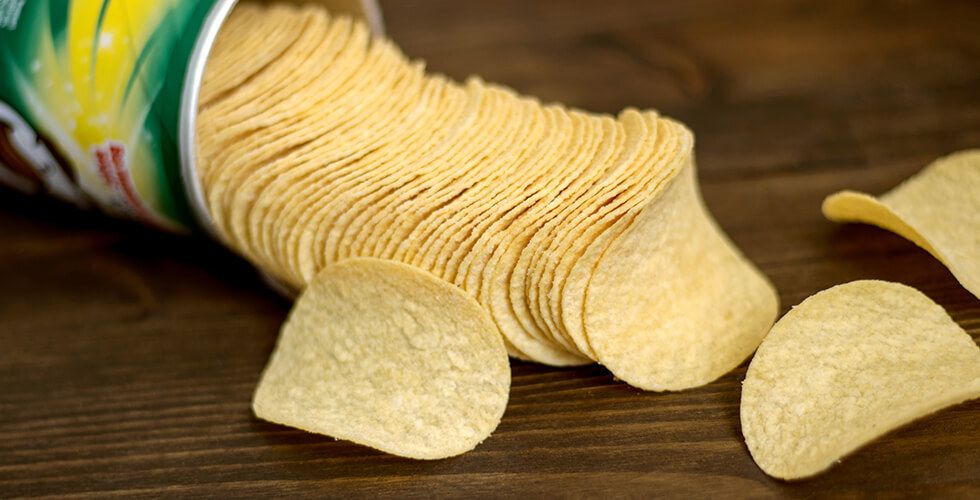
Pringles may look like potato chips, but they’re far from the classic slice-and-fry snack you might expect. Technically, they’re not even considered “potato chips” by the FDA. That’s because Pringles are made from a dehydrated slurry of processed ingredients, shaped into uniform, stackable crisps. The base? Less than 50% potato.
Instead, you’ll find a mixture of dried potato flakes, corn flour, wheat starch, rice flour, and emulsifiers—blended into a dough, rolled out, cut, and fried in a high-temperature oil bath. Add artificial flavorings, colorants, and preservatives, and you’ve got the familiar addictive crunch that leaves orange dust on your fingers.
But that crunch comes with concerns. First, acrylamide, a potentially cancer-causing chemical, is formed when starchy foods, such as Pringles, are cooked at high temperatures. Tests conducted by consumer watchdog groups have revealed that Pringles occasionally contain higher-than-recommended levels of acrylamide, particularly in their original and BBQ flavors.
Second, the refined vegetable oils used for frying—often blends of sunflower, corn, or soybean oil—are rich in omega-6 fats, which, when consumed in excess, can promote inflammation. Combine that with MSG, artificial flavors, and salt, and you’ve got a hyper-palatable food designed to override satiety cues.
Ultimately, Pringles’ ultra-processed nature categorizes them as foods associated with poor gut health, obesity, and metabolic issues when consumed regularly. They may be fun to eat, but they’re engineered more for shelf life and snackability than nutrition.
Bottom line: Pringles are a marvel of food engineering, but not of health. Beneath the sleek packaging lies a processed food cocktail that’s more of a science experiment than a snack. Enjoy occasionally, but don’t confuse them with real food.