


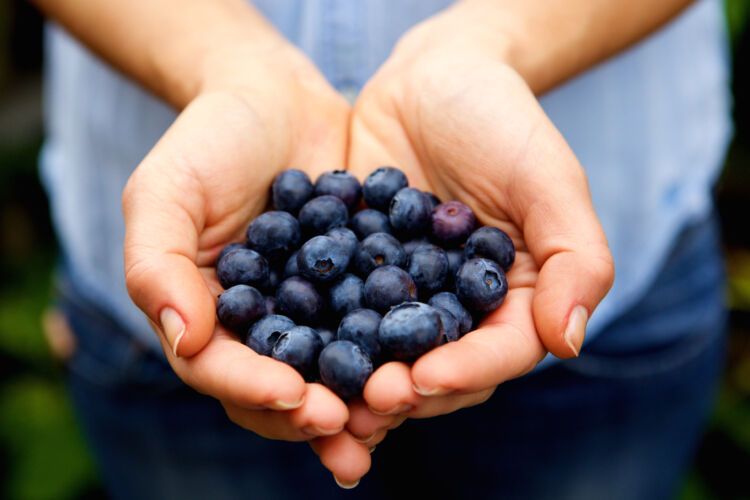
Blueberries aren’t just a tasty snack—they’re antioxidant powerhouses that help your body fend off inflammation, oxidative stress, and even chronic disease. However, if you want to maximize their protective benefits, timing and food pairings are more important than you might think.
According to registered dietitians Maggie Moon and Lisa Bannan, consistency is key. “The real secret isn’t when you eat blueberries, but how often,” says Moon. Anthocyanins—the antioxidant pigments that give blueberries their deep blue hue—start circulating in your system shortly after you eat them and can remain active for up to two days. That’s why dietitians recommend enjoying blueberries at least several times a week for brain and heart health.
Want to boost their impact? Try pairing blueberries with healthy fats, such as almonds or avocado, to help your body absorb more of their nutrients. Protein-rich pairings, such as yogurt or nut butter, can also increase antioxidant bioavailability. And if you’re tossing them into a smoothie? Great news—blending helps break down the cell walls and improve absorption.
While fresh and frozen berries are best, try not to cook them for too long—heat can degrade some of their most beneficial compounds, such as vitamin C.
Need easy ways to fit them in? Toss blueberries into oatmeal, swirl them into a vinaigrette, freeze them into lemonade cubes, or simply snack on them by the handful. However you enjoy them, make it a regular habit—because when it comes to this superfruit, it’s not just about timing, but long-term consistency.
Pro Tip: A blueberry a day may not keep the doctor away—but a few servings a week? That’s a delicious step toward a healthier you.