
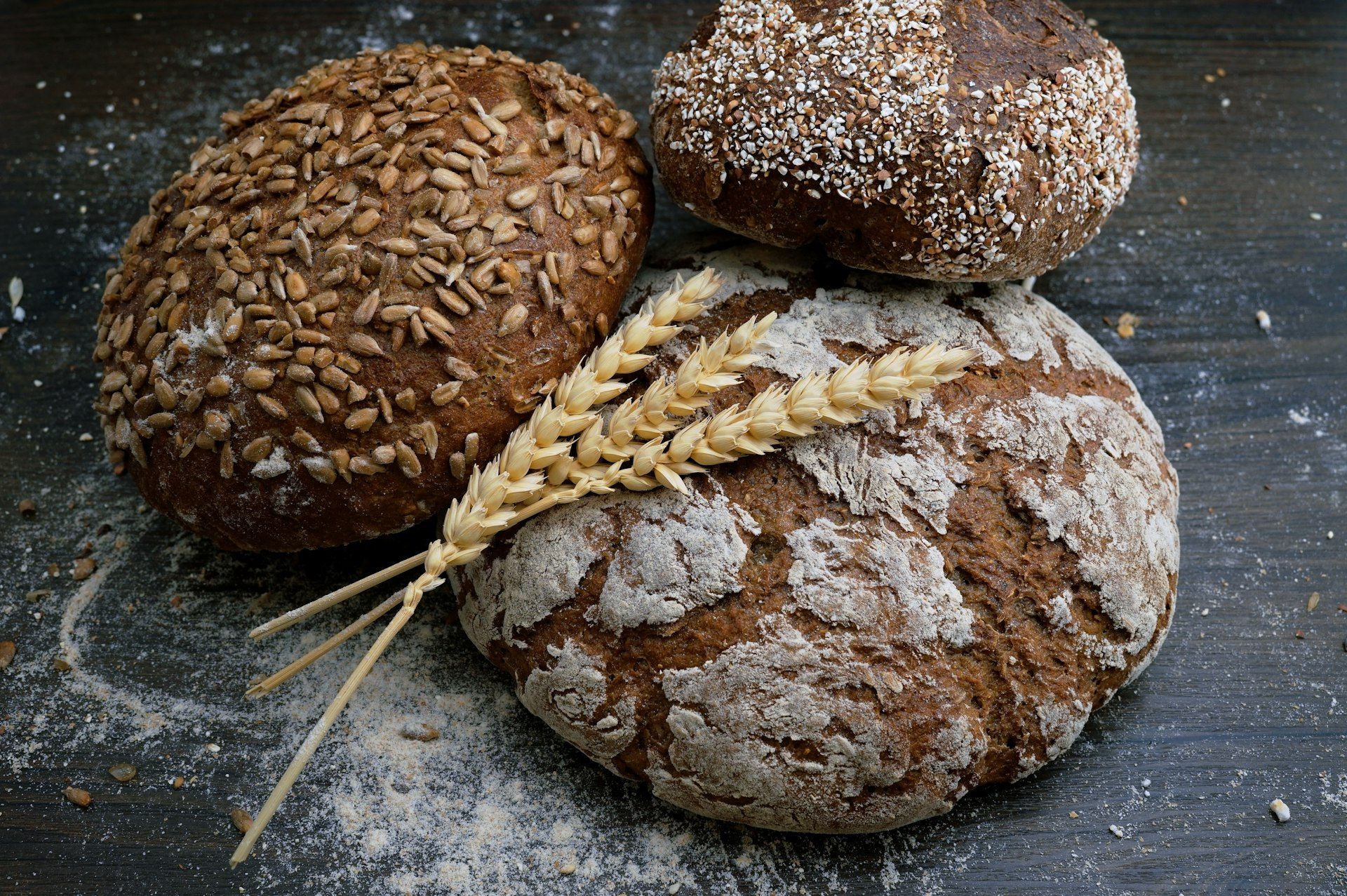
The front of the box has a golden sheaf and a number of grams. The ingredient list still starts with sugar. Whole-grain health claims and stamps are doing honest arithmetic on a dishonest plate: a cookie can contain whole wheat and still be an ultra-processed dessert. Fiber is good. A chocolate chip disc is still a chocolate chip disc.
Public-health advice to replace refined grains with whole grains is sound. Whole grains keep bran and germ, so you get fiber, minerals, and a slower chew. Industry heard “whole grain” as a permission structure. Crackers, cereals, granola bars, and “made with whole grain” cookies now wear the language of oatmeal while behaving like snacks. FDA allows certain whole-grain related claims when wording and evidence fit the rules. A voluntary Whole Grain Stamp from the Whole Grains Council tells you a minimum number of grams of whole grain per serving. Neither one is a license to call a pastry breakfast.
What does a whole-grain stamp actually mean?
It means the serving contains at least the grams of whole grain the stamp prints, if the manufacturer joined the program and followed the Council’s criteria. The basic stamp can appear on foods that also contain refined grain. The 100% stamp is stricter. Grams are not a health halo. A muffin can clear a gram threshold and still be a muffin: added sugar, refined oils, and a texture designed in a plant. “Made with whole grain” on a package can mean a dusting. The first ingredient tells you more than the front banner.
Are whole-grain processed foods still ultra-processed?
Often yes. NOVA does not give a cookie a pass because the flour was brown. Ultra-processed products are industrial formulations with cosmetic additives, flavors, and a long shelf life. Kevin Hall’s 2019 trial showed people ate more calories, without trying to, on an ultra-processed menu versus an unprocessed one matched for presented nutrients. Whole-grain pretzels can sit on that menu. A bowl of actual oats cannot be confused with them except by a copywriter.
Epidemiology that praises whole grains is mostly praising dietary patterns: brown rice, oats, barley, rye bread you could bake. It is not a standing ovation for a 90-calorie “whole grain” snack pack. When researchers later look at ultra-processed share of the diet, the picture gets less flattering, even if some of those products contain bran.
How should you read whole-grain claims at the store?
- Turn the package over. If sugar, refined flour, or a seed oil still leads, the stamp is a sticker.
- Prefer foods that are the grain: oats, brown rice, barley, popcorn you pop, bread with a short list.
- Treat “made with whole grain” as a warning that the maker needed an adjective.
- Kids’ snacks with a stamp are still snacks. Serve fruit or leftovers first.
The Whole Grains Council’s basic stamp can appear on foods that still contain refined grain, as long as a minimum gram amount of whole grain is in the serving. The 100 percent stamp is stricter. Neither stamp scores added sugar. A “whole grain” cookie can clear a gram threshold and still be dessert. FDA’s qualified-claim world is about what wording is allowed, not about whether you should eat the object for breakfast. First ingredient, sugar position, and length of the list still beat a sheaf of wheat on the front.
Epidemiology that praises whole grains is mostly praising oats, brown rice, barley, rye, and bread you could bake. It is not a standing ovation for a 90-calorie snack pack. Buy the grain. Leave the cookie in the cookie category, even when it learned to say “wheat.”
Whole grain is a food. It is also a marketing department’s favorite adjective. Buy the grain. Leave the cookie in the cookie category, even when it learned to say “wheat.”
Grams of whole grain are a useful number on oats and actual bread. They are a diversion on a cookie. If you want the benefit that showed up in cohort studies, eat the grain as a grain. The stamp can come along for the ride. It should not be the reason you bought a snack.