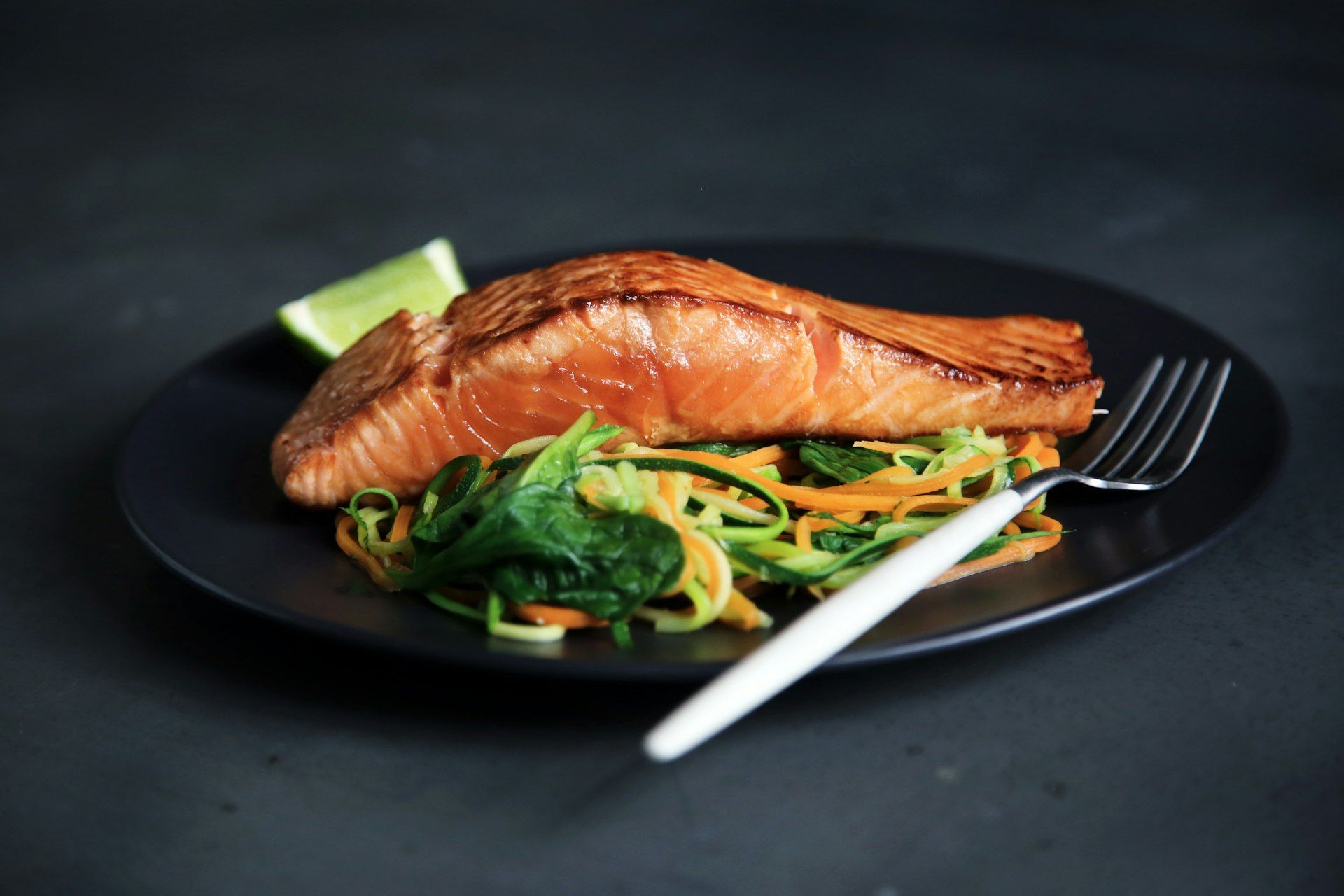
The fillet in the case is pink, expensive, and sold as a health food. Farmed salmon is a different product from wild salmon: the color is finished with feed pigments, and the fat profile follows the feed, not a wild food web. That does not make aquaculture evil. It makes the package a poor narrator.
Wild salmon get carotenoids such as astaxanthin by eating krill and other prey. NOAA Fisheries notes that farmed salmon are supplemented with natural or synthetic astaxanthin identical in structure to the wild pigment. FDA color-additive rules allow astaxanthin in salmonid feed up to 80 milligrams per kilogram of finished feed to enhance the pink-to-orange flesh. The fish is not blushing from a life of shrimp. It is being painted from the inside with an approved additive.
Why is farmed salmon dyed pink?
The accurate word is pigmented through feed. Without that step, much farmed Atlantic salmon would look grayish, and shoppers would walk past it. Color is a purchase driver. It is also a tell: you are looking at an agricultural product, closer to a confined animal than to a fish that ran a river. Canthaxanthin has also been used. Astaxanthin is now the industry standard in many markets. None of this is a secret in aquaculture manuals. It becomes a secret at the seafood counter, where “fresh salmon” does the work of a species name, a husbandry method, and a nutrition label at once.
Is farmed salmon still a good omega-3 food?
It depends on the feed. Fish do not invent EPA and DHA. They accumulate those long-chain omega-3 fats from marine sources. NOAA is explicit that fish oil in aquaculture feed is a major source of those fats. As the industry stretches fish oil with vegetable oils, the fillet’s fatty-acid profile shifts. A farmed fish can still contain omega-3s. It is not automatically the same as a wild Chinook that ate a marine diet. Ask for species and origin. Atlantic salmon in U.S. retail is typically farmed.
How should you buy salmon without the marketing?
- Look for the species name and “wild” or “farmed.”
- Canned wild pink or sockeye is often the budget way to eat the actual fish.
- Do not pay a health premium for color. Pay for origin you can verify.
- Cook it simply. The omega-3 pitch does not require a teriyaki glaze made of sugar.
How can you tell wild salmon from farmed at the store?
Ask for the species and the country. Atlantic salmon in ordinary U.S. grocery cases is typically farmed. Wild Pacific species — sockeye, coho, king, pink, keta — should say wild and a fishery. Frozen and canned wild fish are often the honest versions of the same animal, without a foam tray. “Fresh” is a temperature, not a habitat. Color is not a habitat either. A pale wild king can be a better fish than a neon farmed fillet that learned its blush from feed.
Organic farmed salmon, where the label exists, is still farmed. It is a feed-and-husbandry standard, not a river. If sustainability is the question, look up the fishery or the farm, not the adjective on the tag. If nutrition is the question, remember that omega-3 content follows feed. A fish that ate more marine oil will usually carry more EPA and DHA than a fish finished on a vegetable-oil-heavy pellet. Companies do not have to print that ratio on the sticker.
Home cooking does not require a restaurant glaze. Salt, heat, and a vegetable will do. Leftover canned sockeye on oats or a salad is closer to the health story salmon was sold on than a teriyaki farmed fillet with a sugar crust. Eat the fish. Interrogate the costume.
Eat fish. Just stop letting a pigment protocol impersonate a wild food web. Farmed salmon can be dinner. It should not be a costume. If you like farmed, buy it on purpose, not by accident.