
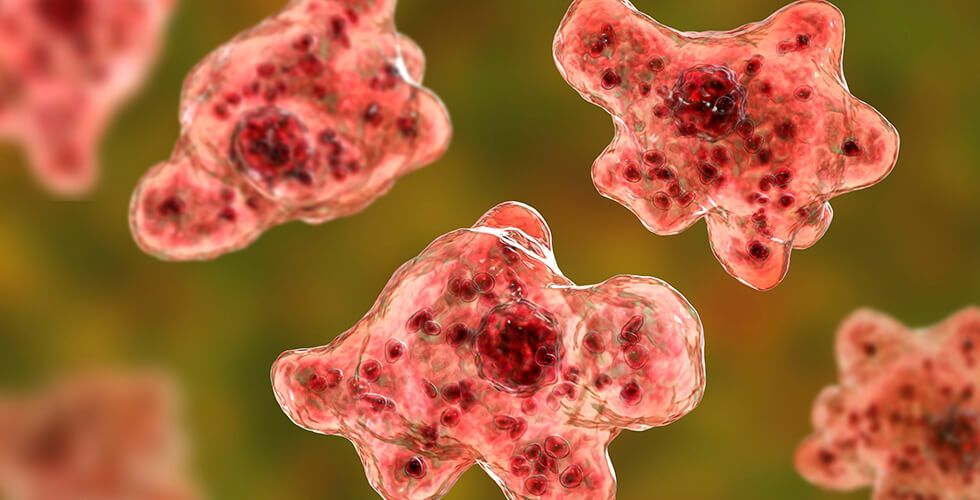
Health officials in South Carolina have confirmed the death of a patient from primary amebic meningoencephalitis (PAM)—a rare but almost always fatal brain infection caused by the Naegleria fowleri amoeba, commonly known as the “brain-eating amoeba.”
The case was reported by Prisma Health Children’s Hospital–Midlands, though specific details about the patient have not been released. According to the South Carolina Department of Public Health, the infection is believed to be linked to Lake Murray, a popular recreation spot, though the exact source of exposure remains unconfirmed. This marks the first known case in South Carolina since 2016.
Dr. Anna-Kathryn Burch, a pediatric infectious disease specialist at Prisma Health, stated that PAM is “devastating,” with a fatality rate exceeding 97%. Since its identification in the 1960s, almost all U.S. cases have resulted in death. The amoeba infects people when contaminated water enters the nose, typically during activities like swimming, diving, or water sports in warm freshwater.
Naegleria fowleri thrives in lakes, rivers, and hot springs, especially during the summer. It cannot infect people through drinking water or person-to-person contact.
The Centers for Disease Control and Prevention (CDC) recommends the following precautions when in warm freshwater:
- Hold your nose or use a nose clip when jumping or diving.
- Avoid stirring up sediment in shallow, warm areas.
- Keep your head above water in hot springs.
This isn’t the only case reported in 2025. In May, a 71-year-old Texas woman died after contracting the infection from using tap water in a nasal irrigation device while traveling in her RV. She experienced symptoms within four days and passed away just eight days later.
Though rare, PAM serves as a tragic reminder of the potential dangers hidden in seemingly safe water activities.