You stand up after a long stretch at the desk and everything complains at once—knees, hips, low back. The easy story is, “I’m just getting old.” That framing is often lazy. Age changes tissue, yes. But joints ache more after sitting all day for a simpler reason: your body spent hours in one shape, with weak hips and glutes offline and almost zero movement variety.
Sitting is not evil. Endless sitting without interruption is the problem. When you finally stand, stiff joints are often a receipt for how you spent the day—not a verdict that you are broken.
Why do my joints feel worse after sitting?
Long sitting parks you in hip flexion. Your thighs stay bent toward your torso. Hip flexors stay shortened. Glutes and the deep hip stabilizers do almost nothing. Knees stay bent. Ankles stay quiet. Your spine settles into whatever your chair and screen allow.
Joints like motion. Synovial fluid and tissue tolerance respond to load and unload cycles. When you sit for hours, you remove those cycles. Blood flow slows in the tissues that should be working. When you finally stand, everything asks for range and strength it has not practiced since morning.
That first stiff step is not proof of inevitable decline. It is often proof that your day had one posture and one speed: seated and still.
Is “I’m just getting old” the wrong story?
Aging is real. Recovery can take longer. Cartilage and tendons are not the same at sixty as at twenty. Blaming age alone still lets a bad habit hide.
Plenty of people in their forties and fifties who move through the day—walks, stairs, short strength sessions, varied sitting and standing—stand up with less drama than desk-bound twenty-somethings. The difference is not magic genetics. It is exposure: hips that extend, glutes that fire, knees that straighten and bend under control, spines that change position.
If your joints only scream after marathons of sitting, start there before you write yourself off as “old.”
What are micro-breaks and do they actually help?
A micro-break is a short interruption—often one to three minutes—where you change position and move. Stand. Walk to refill water. Open a hip. Do a few bodyweight squats. Look far away from the screen. Then return to work.
You do not need a gym timer or a perfect schedule. You need a cue. Try:
- Every time you send a long email, stand while it sends and walk a short loop.
- Every call, stand or pace unless you truly need notes on screen.
- Every hour, stand up, reach overhead, and take twenty easy steps.
- Every bathroom trip, add a flight of stairs or a hallway lap on the way back.
Small breaks beat one heroic stretch at 6 p.m. Your joints respond to frequent unloading more than to a single rescue session after damage is already done.
Hip flexors vs glutes: what sits wrong?
Think of a tug-of-war across the front and back of your hips. Long sitting favors the front. Hip flexors stay in a shortened position. Glutes stay quiet. When you stand, the front feels tight and the back feels weak. Knees and low back often pick up the slack.
You do not need a complicated mobility routine. You need both sides of the equation:
- Open the front: a gentle half-kneeling hip flexor stretch, a short lunge position, or simply standing tall and gently tucking the pelvis without crunching your ribs.
- Wake the back: glute bridges on the floor, sit-to-stands from a chair, or short walks with a purposeful push through the heel.
Stretching a tight front without waking the glutes is incomplete. Strengthening without changing the sitting pattern is also incomplete. Do both, lightly, often.
Can walking meetings fix desk stiffness?
Sometimes. Walking meetings work when the call does not require a keyboard and when outdoor or hallway walking is realistic. Even a slow pace changes hip angle, loads the legs, and breaks the freeze.
They fail when you treat them as the only fix—or when you sit harder the rest of the day to “make up” for the walk. Use walking meetings as one tool. Pair them with micro-breaks on deep-work days when you cannot leave the chair for long.
If weather or privacy blocks outdoor walks, indoor laps still count. Motion is the point, not a step-count trophy.
What strength work helps if you hate the gym?
You do not need gym-bro volume. You need simple loads your hips, knees, and back recognize:
- Sit-to-stand: from a sturdy chair, stand up and sit down slowly for a few sets. Hold a backpack for extra load if bodyweight is easy.
- Hip hinge pattern: soft knees, push hips back as if closing a car door with your backside, then stand tall. Keep the range honest; this is not a circus stretch.
- Step-ups: a low stable step or bottom stair. Controlled up, controlled down.
- Carries: walk while holding groceries or a suitcase evenly—or one side at a time for a short farmer-style walk if balance feels solid.
Two or three short sessions a week beat an unused membership. Keep pain as a guide: mild effort is fine; sharp joint pain is a stop signal.
Is a standing desk a cure-all?
No. Standing all day in one locked position can irritate feet, knees, and low back too. Standing is a useful option, not a moral upgrade over sitting.
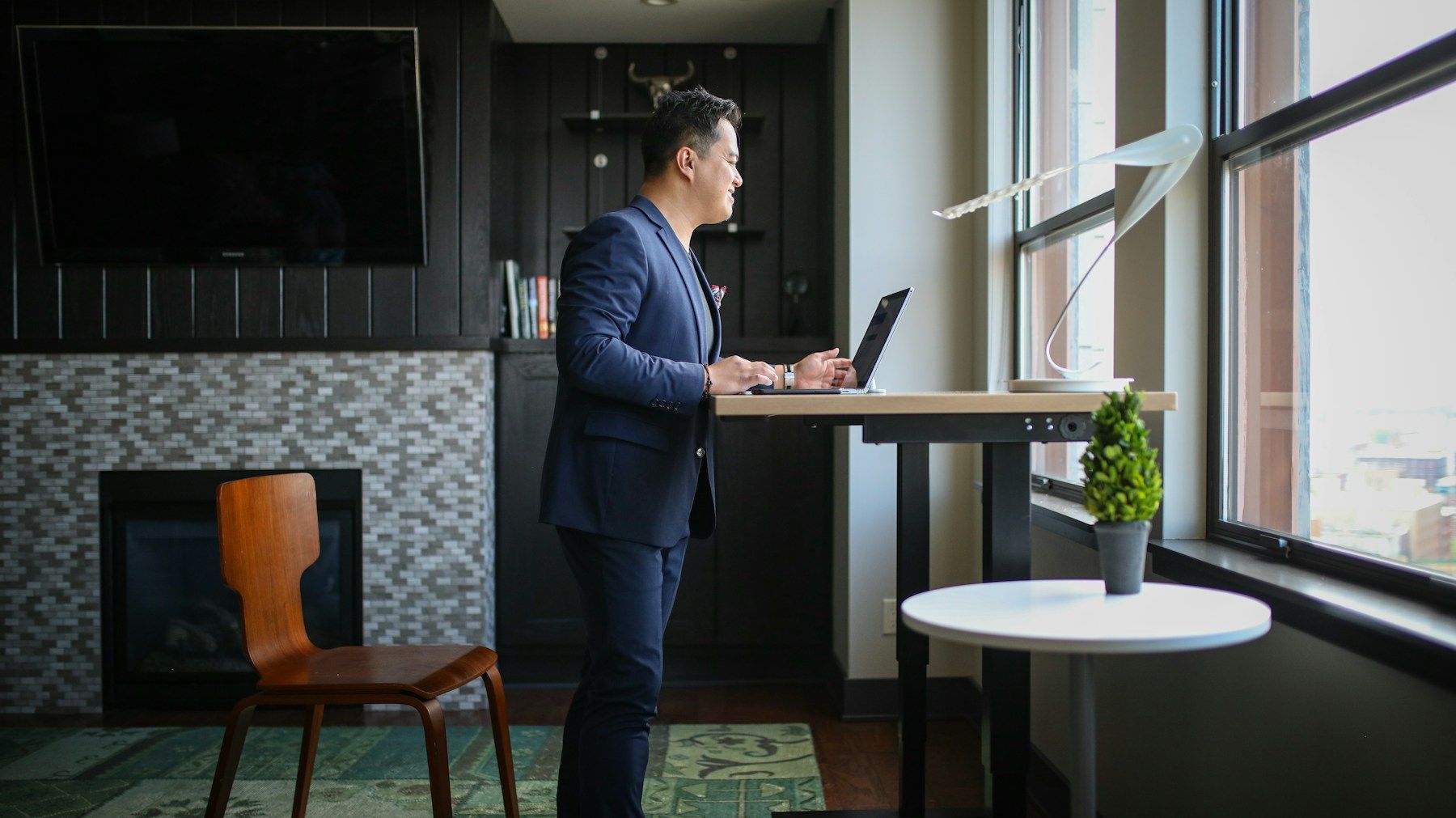
The win is changing positions. Sit for focused work. Stand for calls. Walk for thinking. Stretch when you notice the stiff first step. A standing desk helps only if you actually alternate—and if your screen height does not force a shrug or a forward head.
If you stand, keep soft knees, shift weight, and take steps. Frozen standing is just sitting with longer legs.
When should joint pain send you to a clinician?
Self-care has limits. See a qualified clinician if you have:
- Swelling, redness, or a joint that feels hot
- Pain after a fall, twist, or sudden pop
- Night pain that wakes you, unexplained weight loss, or fever with joint pain
- Numbness, progressive weakness, or pain that shoots down a leg with bowel or bladder changes
- Stiffness and pain that keep getting worse despite movement breaks for weeks
This article is about desk-day stiffness and practical movement—not a diagnosis and not a promise to erase arthritis or any disease. If something feels wrong beyond “I sat too long,” get it checked.
A simple day that treats your joints better
You do not need a new personality. You need a few non-negotiables:
- Break sitting at least once an hour with standing or walking
- Open hip flexors briefly and wake glutes a few times a day
- Take one short walk after a meal or between meetings
- Do a small strength habit two or three days a week
- Alternate sit and stand instead of worshipping either
“I’m just getting old” is a closed door. “My joints stiffen when I don’t move” is a door you can open. Start with the next hour: stand up, walk twenty steps, and notice whether the first step after lunch feels less like a verdict and more like feedback you can use.
If the inflammation is already in your joints
Movement breaks and stronger hips help a lot of desk-day stiffness. If your knees, hips, or back still feel hot, puffy, or stubbornly sore even when you are moving more, Joint Flex is an eight-active formula built for everyday joint comfort and mobility support—so you are not relying on sitting less alone.
You get 60 days to decide, and you keep the bottles. Free shipping on every order.