
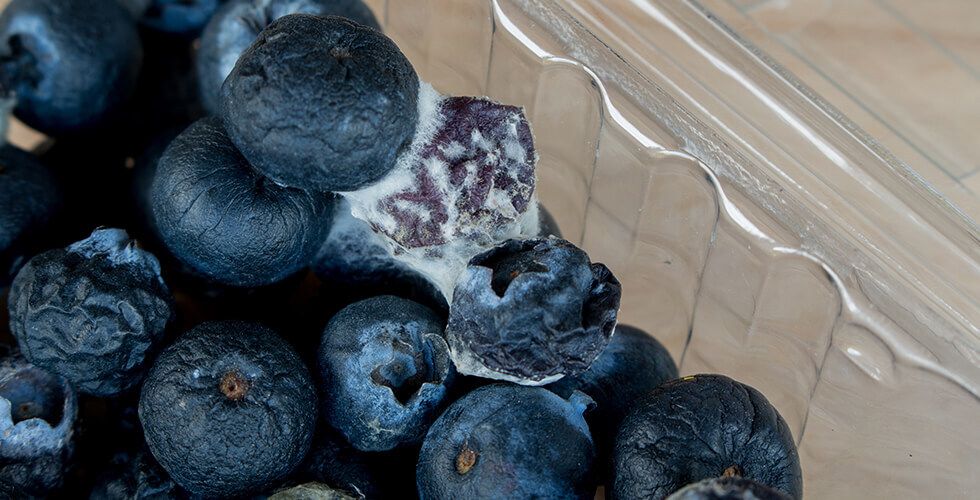
It may seem harmless at first—a single squishy blueberry tucked among hundreds of plump, fresh ones. But that one rotten berry can quietly trigger a chain reaction that ruins the entire container. Here’s why.
When a blueberry begins to rot, it’s usually because of mold, often Botrytis cinerea (gray mold), or bacterial soft rot. These fungi and bacteria thrive in moist, warm environments and spread rapidly. The moment a berry breaks down, it releases moisture, spores, and enzymes that seep into nearby berries. Because blueberries have thin skins and high water content, they’re especially vulnerable. Even a tiny tear in the skin of a neighboring berry can provide an entry point for mold or bacteria to take hold.
Rotting berries also release ethylene gas, a natural ripening hormone. While ethylene is beneficial during harvest, excess gas trapped in a closed container accelerates decay in surrounding fruit. What starts as one soft berry can quickly become a soggy mess if the container is left unchecked.
This is why sorting matters. One bad berry left in the bunch can quietly sabotage your entire purchase. It’s best to inspect blueberries as soon as you bring them home—discard any that look moldy, shriveled, or leaking juice. Then store them in a breathable container lined with paper towels to absorb excess moisture, and keep them refrigerated.
In the world of produce, blueberries are small but mighty—and delicate. A little vigilance goes a long way in protecting your berries (and your grocery budget) from a stealthy, spreading spoil. Just remember: when it comes to blueberries, one bad one really can ruin the bunch.
