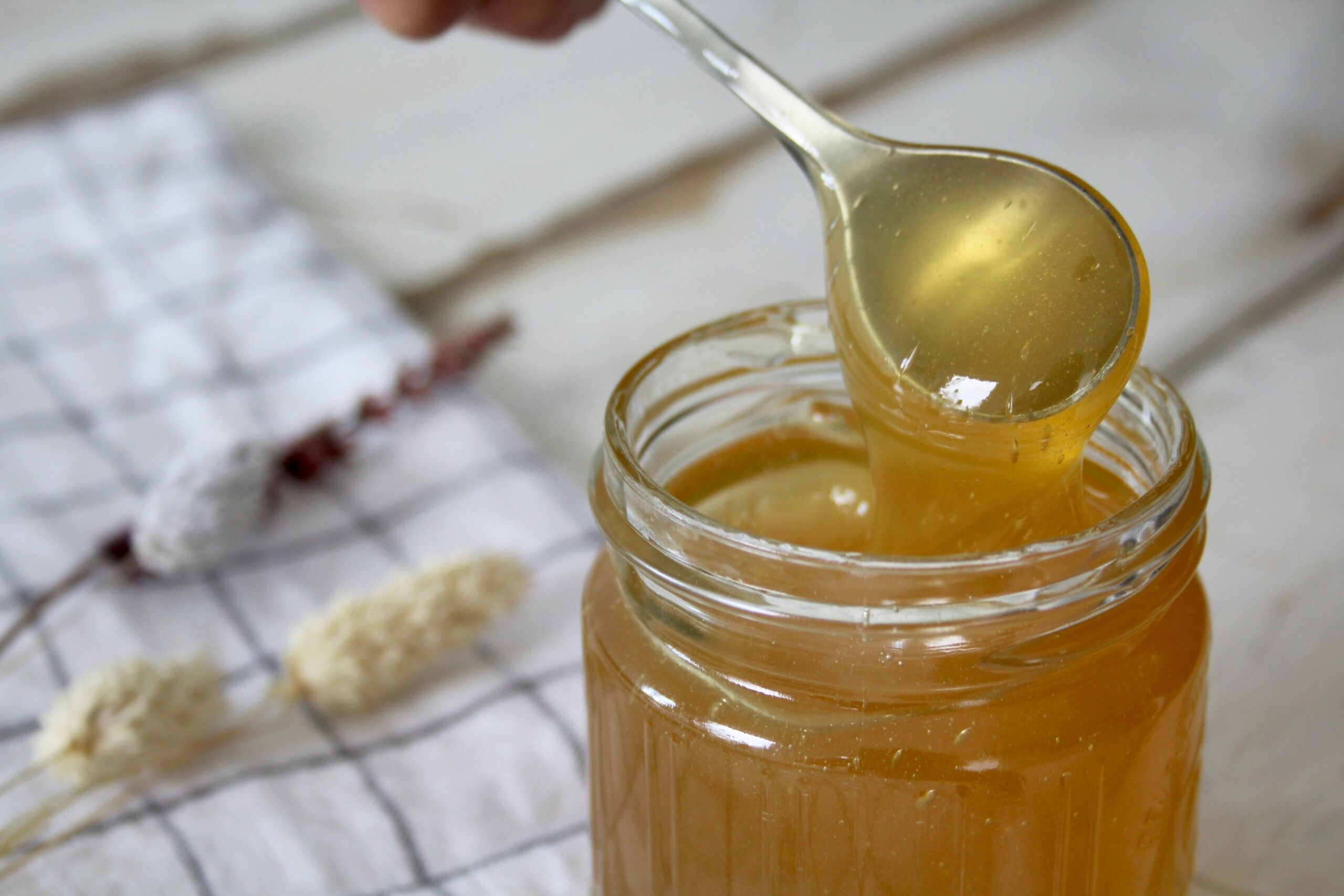
Honey has been used as both a food and traditional remedy for thousands of years. But lately, one particular habit has been making the rounds: eating a spoonful of honey before bed.
Some people swear it helps them sleep. Others reach for it when they have a nighttime cough or scratchy throat. And you’ll even hear claims that honey somehow “burns fat” while you sleep.
So what can a spoonful of honey before bed actually do?
Here’s what’s worth knowing before you reach for the jar tonight.
1. It May Calm a Nighttime Cough
This is probably the most compelling reason to keep honey in your pantry.
Honey can coat and soothe an irritated throat, and research suggests it may help reduce coughing associated with upper respiratory infections.
That can be particularly useful at night, when coughing seems to become infinitely more annoying the moment your head hits the pillow.
If a cough is keeping you awake, a small spoonful of honey before bed — or honey stirred into warm water or caffeine-free tea — may provide some temporary relief.
One important exception: Never give honey to a child younger than 12 months because of the risk of infant botulism.
A spoonful before bed is just ONE way to use honey. Discover 51 surprisingly simple ways to put honey to work in your kitchen — inside a physical cookbook we’re currently giving away FREE.
→ Get The Honey Healing Kitchen FREE + 3 Bonus Guides
2. It Might Help You Wind Down — But It’s Not a Sleeping Pill
You’ve probably encountered claims that honey before bed can dramatically increase melatonin or “switch on” your body’s sleep hormones.
The evidence isn’t nearly that clear.
There is some research exploring honey and sleep, but we don’t currently have strong evidence that taking a spoonful before bed will reliably make healthy adults fall asleep faster or stay asleep longer.
Still, there’s something to be said for the ritual itself.
A little honey in a warm, caffeine-free drink can be soothing, and establishing a consistent wind-down routine is one of the simplest ways to signal to your brain that bedtime is approaching.
3. It Gives Your Body a Small Dose of Carbohydrates
Honey is primarily made up of naturally occurring sugars, including glucose and fructose.
That means a spoonful provides a quick source of carbohydrates.
You’ll sometimes see this turned into a much bigger claim: that eating honey before bed “refuels the liver,” prevents a 3 a.m. cortisol spike or keeps your blood sugar perfectly stable all night.
Those claims go beyond what the evidence can currently support.
For most healthy people, a small amount of honey is simply a source of sugar and calories — albeit one that also contains small amounts of plant compounds.
4. Honey Contains Antioxidant Plant Compounds
Honey isn’t just sugar.
Depending on the type and where it comes from, honey can contain various phenolic compounds and other antioxidants.
Darker honeys often contain higher concentrations of certain antioxidant compounds than lighter varieties.
That doesn’t mean you need to start eating honey by the spoonful for antioxidants — fruits, vegetables, nuts and other plant foods provide plenty.
But it does help explain why honey has attracted so much scientific interest beyond its role as a sweetener.
A spoonful before bed is just ONE way to use honey. Discover 51 surprisingly simple ways to put honey to work in your kitchen — inside a physical cookbook we’re currently giving away FREE.
→ Get The Honey Healing Kitchen FREE + 3 Bonus Guides
5. It May Satisfy a Late-Night Sweet Tooth
This benefit is decidedly less exotic — but possibly more useful.
If you routinely find yourself reaching for cookies, ice cream or candy at 9 p.m., a teaspoon of honey in Greek yogurt or herbal tea may satisfy your craving with a relatively small portion.
One tablespoon of honey contains roughly 60 calories and 17 grams of sugar, so more isn’t necessarily better.
Honey is still an added sugar, even though it comes from a beehive instead of a sugar bowl.
But Does Honey Before Bed Burn Fat?
This is where you should be skeptical.
There are popular claims online that eating honey at bedtime causes your body to burn significantly more fat overnight.
There’s no good evidence that a spoonful of honey before bed is a fat-burning shortcut.
In fact, honey contains calories and sugar just like other caloric sweeteners.
If weight loss is your goal, your overall diet, activity, sleep and calorie intake matter far more than the timing of a spoonful of honey.
What About Blood Sugar?
People with diabetes or anyone closely managing their blood sugar shouldn’t assume honey is a “free” alternative to regular sugar.
Honey can raise blood glucose.
If you’re monitoring your blood sugar, consider honey part of your total carbohydrate and added-sugar intake and follow the dietary guidance you’ve received from your healthcare provider.
Raw Honey vs. Regular Honey
Raw honey is minimally processed and may retain more naturally occurring compounds than highly processed honey.
But don’t let the word “raw” turn honey into something it isn’t.
Both raw and regular honey contain significant amounts of sugar.
If you’re choosing honey primarily for flavor, try different varieties. Clover, wildflower, orange blossom and darker honeys can taste remarkably different from one another.
So, Should You Try a Spoonful Tonight?
If you’re a healthy adult and enjoy honey, there’s nothing magical about taking it at bedtime.
But there are a few legitimate reasons you might reach for it.
It may soothe a scratchy throat, temporarily calm a cough, satisfy a sweet craving and make a warm bedtime drink a little more enjoyable.
Just don’t expect it to melt belly fat or instantly solve your sleep problems.
Sometimes the simplest reason for keeping a jar of honey nearby is also the best:
It tastes good — and used in moderation, it can be a perfectly reasonable part of your diet.
A spoonful before bed is just ONE way to use honey. Discover 51 surprisingly simple ways to put honey to work in your kitchen — inside a physical cookbook we’re currently giving away FREE.
→ Get The Honey Healing Kitchen FREE + 3 Bonus Guides