
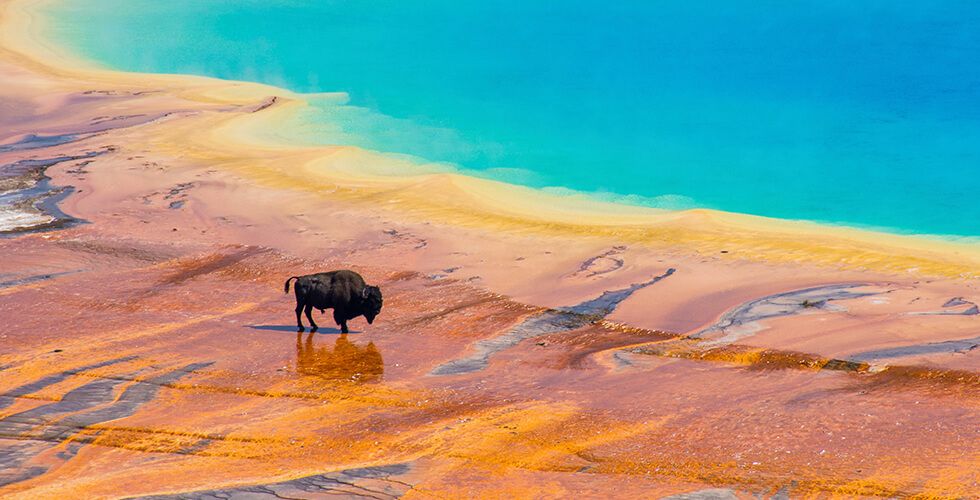
Every few years, social media lights up with alarming claims: animals are fleeing Yellowstone, earthquakes are increasing, and a supervolcano eruption is imminent. But don’t panic — there’s no evidence to support these rumors.
The latest wave of fear was fueled by viral videos claiming to show wildlife “fleeing” the park. In reality, many of these clips were taken outside Yellowstone or show seasonal animal movements that happen every year. According to the U.S. Geological Survey (USGS), none of the footage shows abnormal behavior, and there’s no scientific evidence that animals can predict volcanic activity days or weeks in advance.
As for seismic activity, Yellowstone remains at background levels. In July, the park experienced around 52 small earthquakes — a perfectly normal number for the region, which is one of the most seismically active in the U.S. There’s been no unusual ground uplift, no change in gas emissions, and no increase in hydrothermal activity — all key warning signs that would precede a volcanic event.
Scientists at the Yellowstone Volcano Observatory (YVO) continuously monitor the area with cutting-edge tools, including GPS stations, gas sensors, and satellite data. If there were a credible threat, the public would be informed immediately.
So why do these rumors persist? The idea of a supervolcano eruption is both terrifying and captivating — the perfect recipe for viral misinformation. But rest assured, Yellowstone is not about to blow. The geological processes beneath the park are fascinating, but they’re not signaling any kind of eruption.
In short, trust the science, not the social media fear-mongering. Yellowstone’s ground may rumble from time to time, but the volcano is sleeping soundly, and park officials and scientists are keeping a very close watch.
