
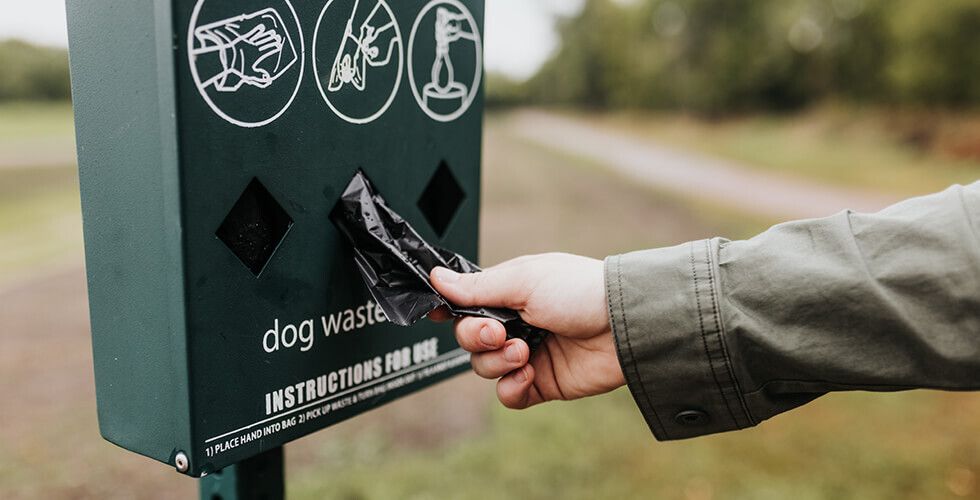
Plastic and “biodegradable” pet waste bags commonly end up in landfills, where decomposition conditions are absent. Landfills are anaerobic—lacking oxygen and microbes—and often compacted, so even compostable or biodegradable bags behave just like regular plastic. Instead of breaking down, they “mummify,” stay intact for decades or centuries, and may generate methane, a potent greenhouse gas.
While compostable poop bags have certifications (e.g., ASTM D6400, EN 13432), they require industrial or home-composting conditions that accept dog waste, which are extremely rare. Without these facilities, these eco-friendly claims ring hollow.
What you can do:
- Reuse existing bags. Use leftover grocery or packaging bags instead of single-use ones. It’s free and reduces the need for new materials.
- Choose recycled‑plastic bags. Look for bags made from post-consumer recycled plastic. These repurpose existing waste without increasing new plastic production, and they don’t introduce microplastics or methane risks beyond trash.
- Flush when allowed. In some areas, water-soluble & flushable bags (e.g., PVA-based) exist. They can dissolve in water and avoid landfill when your sewer system allows it.
- Advocate for better systems. Support local pet-waste composting stations or curbside programs that safely handle pet waste in compost facilities.
- Minimize plastic use overall. Small actions—like packing less single-use plastic elsewhere—compound over time.
Truth: Compostable poop bags require the proper infrastructure to deliver on their promise. Without it, they contribute to pollution and greenhouse gases just like conventional bags. The most effective steps? Reuse what you already have, switch to recycled-plastic options, and support innovative systems like flushable bags or pet waste composting.