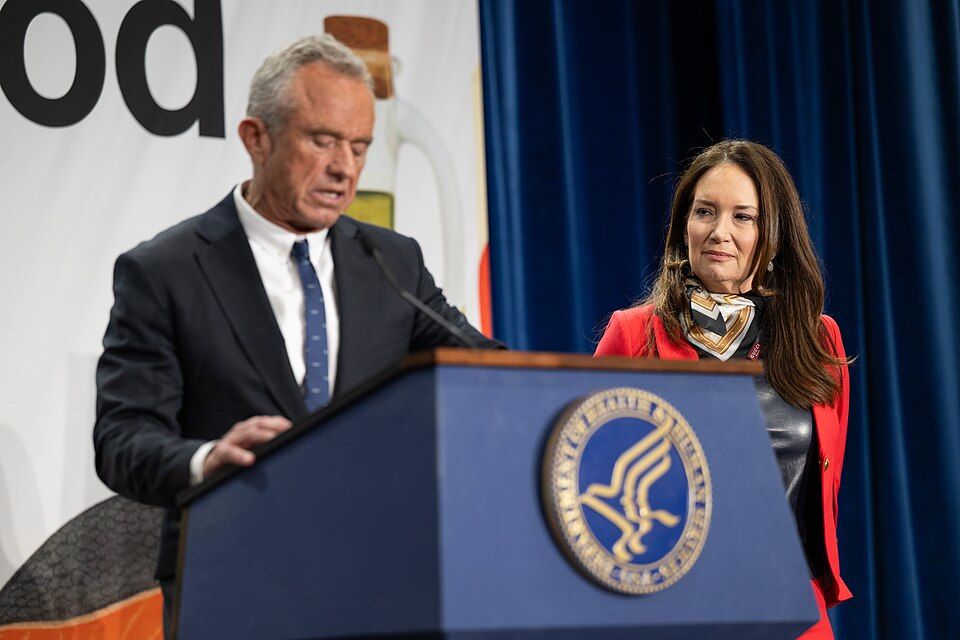
When Robert F. Kennedy Jr. was confirmed as Secretary of Health and Human Services in early 2025, he arrived with a clear target: the American food supply. Within months, his agency had overhauled the federal dietary guidelines, launched a campaign to eliminate synthetic dyes from the food supply, and published a commission report declaring that the ultra-processed food industry was driving a chronic disease crisis in American children. It was the most aggressive federal attention paid to food quality in decades, though not the first time the food industry has faced pressure to clean up its act.
Similar pushes in the mid-2010s saw major companies like General Mills and Kellogg’s pledge to remove artificial dyes and ingredients from their products, only to quietly reverse course when consumer backlash and reformulation costs made it inconvenient. The question worth asking now is whether any of it actually moved the needle, not in Washington, but in grocery carts and kitchen cabinets across the country.
What RFK Jr. Actually Did
The centerpiece of Kennedy’s food agenda was the new Dietary Guidelines for Americans 2025-2030, released in January. For the first time in the guidelines’ history, the federal government explicitly advised Americans to avoid highly processed foods as a category, marking a significant departure from previous editions that focused on individual nutrients like sodium and saturated fat rather than calling out industrial food processing directly. The accompanying food pyramid was also overhauled, placing protein, healthy fats, and vegetables at the foundation, while dramatically reducing the emphasis on grains that had defined federal nutrition guidance for decades.
In May 2025, the MAHA Commission released its first major report, which found that nearly 70% of American children’s calories were coming from ultra-processed foods, and identified the food supply as a primary driver of the chronic disease epidemic. Harvard nutrition experts called it extraordinary how quickly the administration had made “big food” a political and public health priority.
On the regulatory side, last January the FDA banned Red Dye No. 3 from the food supply — the first major federal action against an artificial food dye in decades. By April, the agency had announced plans to phase out all eight remaining petroleum-based synthetic dyes from the U.S. food supply by the end of 2026, with food companies voluntarily agreeing to reformulate. Fifteen or more state-level food ingredient bills were passed in 2025 alone, with states like California, West Virginia, and Texas moving ahead with their own restrictions on dyes and additives, in some cases going further than federal guidelines.
Signs That Something Is Actually Shifting
The most telling early signal isn’t coming from consumers, but from the food industry itself. Companies don’t spend money reformulating products unless they sense a real shift in the market, and in 2025, the reformulation announcements came fast. PepsiCo announced it was removing artificial colors and flavors from Lay’s and Cheetos, with its CEO publicly stating the company was “accelerating” its transition to natural ingredients. Tyson Foods said it was proactively reformulating products that still contained petroleum-based dyes. Nestlé, Kraft Heinz, Hershey, and Coca-Cola all made similar commitments. Perhaps most significantly, Walmart pledged to remove synthetic dyes and artificial ingredients from its entire private-label food line, described by industry analysts as one of the largest private brand reformulations in retail history.
State legislatures moved quickly as well, with more than 15 food ingredient bills were adopted across the country in 2025, with nearly 70 introduced. That level of legislative activity across both red and blue states signals that the appetite for food reform isn’t purely partisan.
On the consumer side, organic food sales reached $76.6 billion in 2025, a 6.8% increase and double the growth rate of the overall food marketplace. It was the third consecutive year that organic outpaced the total market, with organic food growing roughly three times faster than conventional food sales. Surveys also showed a modest but real shift in awareness, with 25% of consumers saying they were actively trying to reduce their intake of ultra-processed foods and artificial ingredients, up from the prior year.
Signs That Change Moves Slow
The corporate announcements and sales data tell an encouraging story but the actual eating habits of most Americans tell a different one. According to CDC data published in 2025, ultra-processed foods still make up 55% of total calories consumed by Americans, with children consuming even more at nearly 62%. That number has declined only slightly since 2017-2018, suggesting that years of growing awareness about processed food’s health effects have produced modest movement at best.
Consumer surveys back that up. While 25% of Americans say they’re trying to cut back on ultra-processed ingredients, that means 75% either don’t care or actively prefer them. Price and convenience, the two biggest advantages ultra-processed foods have always held, remain powerful forces that health messaging alone has struggled to overcome.
There’s also a historical reason for skepticism about the industry’s reformulation pledges. This isn’t the first time Big Food has promised to clean up its act. General Mills pledged to remove synthetic dyes from its cereals in 2015, then started using them again in 2017 after consumer complaints. Kellogg’s made a similar pledge around the same time and missed its own deadline. Mars committed to removing artificial colors from its U.S. products by 2021 and quietly walked it back, saying American consumers had different preferences than European ones.
The pattern, announce, generate goodwill, reverse, has repeated enough times that the current wave of reformulation pledges warrants at least some healthy skepticism until the products actually change on store shelves.
So, Is It Working?
The honest answer is, partly, and early. The RFK effect appears to be real but it’s showing up first in corporate boardrooms, state legislatures, and organic food aisles before it shows up in what most Americans are actually eating day to day. The cultural conversation around ultra-processed food has shifted in a significant way, and the policy and industry responses in 2025 were more concrete and more sustained than previous waves of food reform. That’s not nothing.
But the gap between awareness and behavior change is wide, and it has always been the hardest part of any public health effort. Knowing that ultra-processed food is harmful and consistently choosing something else are two very different things, especially when processed food remains cheaper, more convenient, and heavily marketed. The CDC data makes clear that American diets haven’t meaningfully changed yet, even as the conversation around them has.
What’s different this time, arguably, is the combination of federal policy, state legislation, and corporate reformulation happening simultaneously rather than in isolation. Whether that combination is enough to produce lasting change in what Americans eat, or whether it follows the familiar pattern of pledges made and quietly abandoned, is a question the next few years will answer more clearly than 2025 alone can.