
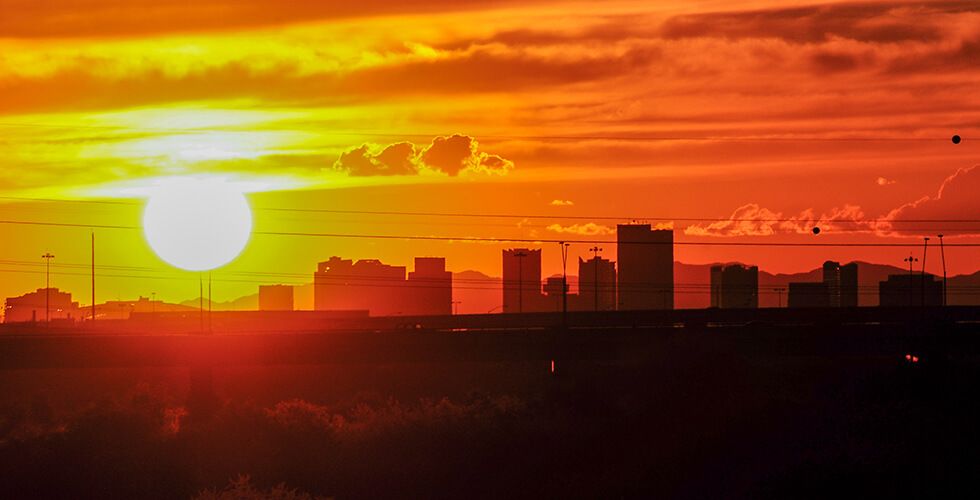
Maricopa County, Arizona—home to Phoenix and its surrounding desert cities—is enduring one of its deadliest and hottest summers on record. Officials report more than 400 suspected heat-related deaths so far this season, as temperatures soar past 110°F (43°C) nearly every day in August, breaking multiple records and pushing the heatwave into its 12th consecutive day.
As of August 11, the county’s medical examiner has confirmed 35 heat fatalities—17 directly from exposure and 18 where heat worsened underlying health or substance-related conditions. Another 369 cases remain under investigation. While the official toll is roughly 30% lower than last year’s midseason numbers, experts warn the final count could still be devastating.
Phoenix, already the hottest major U.S. city, faces extreme urban heat amplified by the climate crisis, rapid development, and a growing unhoused population. Sidewalk temperatures can run 20–30°F hotter than official readings, and three-quarters of heat deaths occur outdoors. Unhoused residents account for about 40% of fatalities, with substance use contributing to two-thirds.
Cooling centers, extended operating hours, and improved medical response have helped temper the toll. Yet, advocates accuse the city and county of undercounting, citing cases where heat wasn’t listed as a factor despite lethal temperatures. “We need more consistency and transparency if we’re going to wrap solutions around this public health crisis,” said local advocate Stacey Champion.
Officials warn that under the Trump administration, cuts to climate programs, healthcare, and social safety nets could worsen the crisis. Rising energy costs may increase indoor heat deaths, which already make up one in four cases.
With wildfires scorching over 180,000 acres statewide and more extreme heat forecast next week, Maricopa County’s struggle underscores a grim reality: in America’s hottest metro, surviving summer is becoming an increasingly perilous challenge.scorch
